Typically — purity issues, rather than dose issues, cause significantly different results between two users utilizing the same protocol. Useful for expectations, not medical claims. At this stage, the majority of online “before and after” photographs are captured. When combined with a diet mindful of calories and resistance training, the initial phase of fat loss commences.
A body-composition scale is utilized to monitor the gradual changes targeted by mitochondrial protocols. Supplies for storage (injection), and recovery that are carefully selected complement MOTS-C protocols. Fat metabolism is influenced by MOTS-C through various mechanisms, directly affecting adipose tissue and indirectly affecting glucose utilization in skeletal muscle. For detailed information on dosing protocols and administration — refer to our MOTS-C Dosing Guide. Nonetheless, no empirical data regarding peptide combinations exists; stacking protocols are based on community insights and mechanistic theories rather than controlled trials. Investigating the protocols for research (reconstitution methods), subcutaneous vs. injection, dosing rates, cycle duration, and the equivalent human dosage derived from animal studies.
That being said, certain trends have surfaced within research and peptide communities concerning the typical discussions surrounding it. The area of glucose regulation is arguably the most talked-about aspect of MOTS-C research. This has sparked interest among body composition researchers, although it remains an unsettled field of study.
Research shows the peptide can reverse age-related insulin resistance in muscle specifically. Well, mitochondrial dysfunction is common among people with obesity. Pairs well with SS-31 for mitochondrial-focused protocols, and with NAD+ precursors for broader energy metabolism support. To work out the draw for a specific vial and dose, use the Peptide Calculator. Research protocols have explored combinations with GLP-1 receptor agonists like semaglutide for metabolic research, growth hormone secretagogues for combined metabolic and hormonal effects, and SS-31 for mitochondrial-focused protocols.
Absence of approved MOTS-c products results in no standardized labeling, validated dosage guidelines, or consensus on administration protocol. “For research purposes only” labels do not confer approval for human consumption (injection), or use for weight loss, anti-aging, or athletic performance. The FDA does not review compounded formulations for safety (efficacy), or quality prior to patient distribution. The FDA confirms a lack of adequate human exposure data and cannot exclude potential harm. Assessment of legal status depends on product type (claims), marketing channels, distribution, compounding regulations, and jurisdictional rules.
Why This Dosing Protocol
This loophole is commonly used for experimental drugs sold on the grey market. Product formulation may change the specific risk type (but all unapproved MOTS-c products), regardless of form, lack official validation for safety, sterility, composition, or legal compliance. Changing the route does not establish an evidence-based or approved dosing protocol. Online dosing recommendations are typically drawn from sellers (online discussion forums), or clinic marketing, not clinical trial data. Product claims diverge considerably, with no authoritative oversight or endorsement.
The original 2015 Cell Metabolism paper showed that MOTS-C treatment in mice prevented age-dependent insulin resistance and obesity, even on a high-fat diet. A 2021 study in Nature MOTS-c research information Communications showed that exercise triggers this nuclear translocation in skeletal muscle cells — directly linking MOTS-C to exercise adaptation . This decline correlates with reduced metabolic flexibility, increased insulin resistance, and decreased exercise capacity, many of the hallmarks of aging that anti-aging peptides aim to address.
The common MOTS-c peptide dosage is 5 mg injected subcutaneously three times a week on non-consecutive days, for 8–12 weeks followed by 4 weeks off, after a 1–2 week tolerance check at 2.5 mg twice a week. The difference between a good protocol and a useless one often comes down to how the product was stored and handled, not the dose. It degrades faster than many of the more commonly used peptides like BPC-157 or CJC-1295. For people who feel generally “inflamed” without a clear acute cause, this can be a meaningful benefit.
Fatigue and energy fluctuations
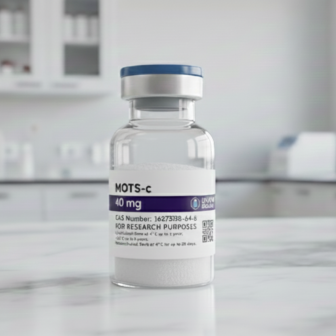
At the standard weekly total, a 10 mg vial covers two weeks; a 40 mg vial covers eight weeks. The standard community protocol totals 5 mg per week , 1 mg on a 5-days-on / 2-days-off schedule,. Standard for cleaning vial stoppers and injection sites before sub-Q dosing. Medical-grade 70% isopropyl alcohol prep pads, individually wrapped and sterile single-use.
Reconstitution is done with bacteriostatic water added slowly against the inside wall of the vial, allowed to dissolve without agitation. Because the effects described are cumulative and undramatic, an off period is the only way to separate a real change from drift. What follows is a MOTS-c dosage chart summarizing ranges reported in research contexts and in published protocol discussions. Nothing is known with confidence about chronic administration (interactions with prescribed medication), effects in people with existing metabolic disease, or safety in pregnancy.
The available data is sparse, but it is something that researchers continue to monitor. The study revealed that the levels of human plasma MOTS-C have an inverse correlation with myostatin, indicating that individuals with higher circulating MOTS-C generally exhibit lower myostatin levels. The exercise study by Reynolds in 2021 (which most protocols reference), involved only male participants. This indicates a trade-off that is dose-dependent — which should be considered when designing your protocol for specific objectives. In our review of user reports on MOTS-C, most recorded drops in glucose levels were from individuals who used it in conjunction with a GLP-1.
Recognizing what is typical as opposed to rare assists in calibrating expectations and determining when an issue needs attention. The side effects that are reported most often fit into predictable categories based on the mechanisms we have discussed. In young individuals, blood levels are roughly 11% higher than in middle-aged people and 21% higher than in older adults. A person with insulin resistance may have a different response compared to someone with excellent glucose regulation. This consideration is vital for anyone intending to include this peptide in their research protocol.

The comparison matrix below delineates the differences between MOTS-C and the peptides it is often used with; it serves an educational purpose rather than suggesting a combination. MOTS-C is often mentioned in discussions about other peptides within “stacks.” Stacking can amplify both potential advantages and potential risks and should only be arranged by a qualified clinician. Mild redness, itching, or minor bruising is typical and usually resolves within a day or two.